
Wines, Tea, Chocolate
Building an Export-Ready Brand with Tea, Honey, Chocolate, and Wine
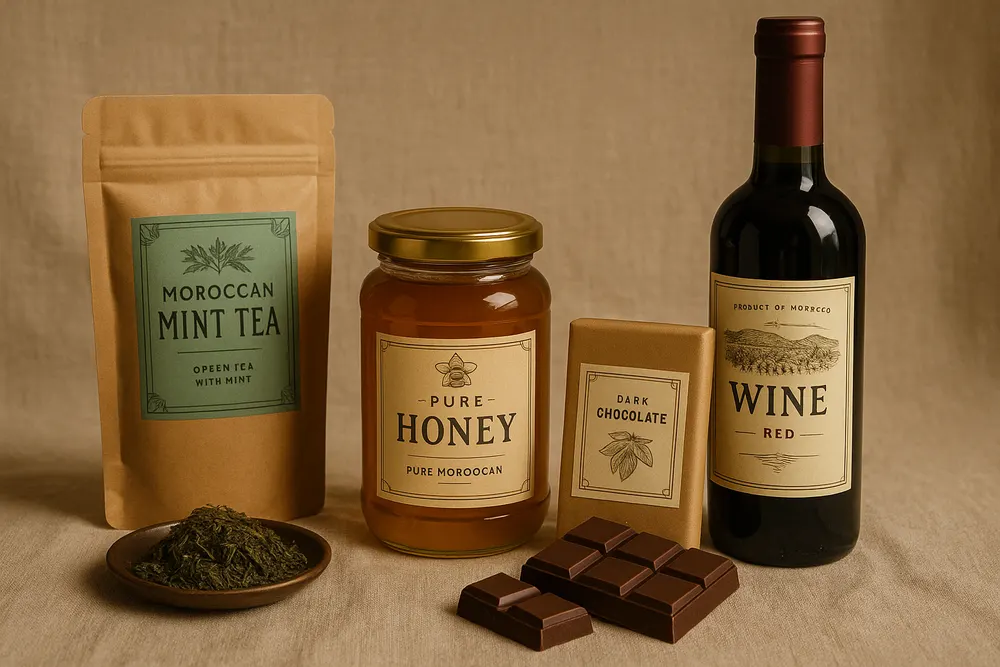
Morocco is known for its rich culinary heritage: mint-infused tea, rare mountain honey, emerging artisanal chocolate, and distinctive wines from regions like Meknes and the Rif. Yet many local producers and entrepreneurs struggle to turn these products into exportable brands with real added value.
This practical guide is designed for B2B professionals and exporters aiming to create a strong Moroccan brand around four key gourmet products: tea, honey, chocolate, and wine.
### 1. 🎯 Define Your Brand Positioning: Tradition, Wellness, Luxury or Innovation?
Before you think about packaging or logistics, it’s crucial to define your brand positioning. Each product can cater to different market segments:
- Tea: Organic, detox, traditional Moroccan blends, wellness-focused.
- Honey: Raw, rare (e.g., euphorbia honey), medicinal, or gourmet varieties.
- Chocolate: Artisan-crafted, infused with Moroccan flavors (orange blossom, dates), or fair trade.
- Wine: Organic, terroir-specific blends, limited editions with storytelling.
### 2. 📦 Design Branding & Packaging for Export Success
A quality product is just the beginning. In export markets, it’s your brand image that opens doors. Focus on:
- A clear, professional brand name that’s easy to pronounce globally
- Modern, elegant packaging suited to your target audience
- Multilingual labels (Arabic/French/English at a minimum)
- Recognizable and trusted certifications: organic, ISO, halal, fair trade
### 3. 📜 Understand Export Regulations and Requirements
Each product comes with its own set of legal and safety requirements. For export, you’ll need:
- ONSSA (food safety authority) certification
- Lab analysis reports (residue, sugar content, alcohol level, etc.)
- Certificates of origin, technical sheets, and safety data sheets (MSDS)
- Licenses for products like wine (depending on destination country)
### 4. 🌍 Target the Right International Markets
Each region has specific tastes and requirements:
- Europe: Favors organic, traceable, eco-friendly products
- Gulf Countries: Prefer halal-certified, premium packaging, and artisanal goods
- Sub-Saharan Africa: Trusts Moroccan products for their quality and accessibility
- North America: Looks for clean labels, authenticity, and natural ingredients
### 5. 🤝 Build a Strong B2B Network
Breaking into a new market depends on the right partnerships:
- Distributors specialized in gourmet or ethnic foods
- B2B wholesale platforms (like Ankorstore, Faire, Alibaba B2B)
- International trade fairs (e.g. SIAL, Gulfood, Biofach, Vinexpo)
Morocco has everything it needs to shine internationally in the world of gourmet foods. By developing a strong identity, clear positioning, and mastering export logistics and standards, your tea, honey, chocolate, or wine can become a proud ambassador of Moroccan excellence abroad.